How Much Does Data Recovery Cost?
When a hard drive, RAID array, SSD, or other storage device fails, one of the first questions people ask is simple: How much does data recovery cost? Unfortunately, there is no universal price that applies to every situation. Data recovery pricing depends heavily on the type of failure, the condition of the storage media, the complexity of the recovery process, and the time and equipment required to retrieve the data.
Professional data recovery is a specialized technical service. Recovering data from damaged or unstable media often requires dedicated imaging hardware, firmware access tools, donor components, and sometimes controlled clean environment procedures. Because of this, pricing is usually based on the difficulty of the case rather than simply the size of the drive.
At ACS Data Recovery, we do our best to keep our prices fair, transparent, and realistic. Every case is handled with the goal of retrieving the maximum amount of recoverable data while minimizing risk to the original media. If you are looking for professional data recovery services, understanding how recovery pricing works can help you set realistic expectations and make informed decisions.
Why Data Recovery Can Be Expensive
Many people assume that recovering lost data is similar to repairing a computer or running a simple software tool. In reality, many recovery cases involve complex diagnostics and specialized equipment. The more severe the failure, the more technical the recovery process becomes.
For example, a drive that was accidentally formatted may only require logical reconstruction of the file system. However, a drive with mechanical failure, such as damaged read/write heads or seized internal components, may require component-level repair before any data can even be accessed.
Some of the factors that influence recovery pricing include:
- The type of storage device (hard drive, SSD, RAID array, etc.)
- The nature of the failure (logical vs physical)
- The capacity of the storage device
- Whether the device has suffered mechanical damage
- Whether the device has been previously opened or tampered with
- The condition of the magnetic media
- The amount of time required to image unstable sectors
- The need for donor components or specialized tools
In many cases, recovery work involves carefully imaging a failing drive sector by sector while managing unstable hardware behavior. If the drive contains mechanical damage, the process may involve internal inspection in a controlled environment similar to the procedures described on our Class-100 clean room page.
Two Main Categories of Data Recovery
Most hard drive recoveries fall into two broad categories: logical failures and physical failures. Understanding the difference between these two scenarios is important because the level of technical work involved can vary significantly.
Logical Data Recovery
Logical recoveries occur when the storage device is still mechanically functional, but the data cannot be accessed due to software-level issues. The drive may still spin normally and communicate with the computer, but the file system or partition structure is damaged.
- Accidental file deletion
- Accidental formatting
- Corrupted file systems
- Damaged partition tables
- Operating system errors
- Malware or ransomware damage
Physical Data Recovery
Physical recoveries are required when the storage device has suffered hardware failure. These cases involve problems with the mechanical or electronic components of the drive.
- Clicking hard drives
- Failed read/write heads
- Seized spindle motors
- Damaged platters
- Firmware corruption
- Electronic board failure
A drive that is clicking repeatedly is often experiencing head failure or internal damage. If you are hearing unusual noises from your drive, you may want to review our guide explaining why hard drives start clicking.
Hard Drive Data Recovery Price Estimates
*For fire and flood damaged hard drives, prices can be significantly higher depending on the condition of the media.
RAID Data Recovery Pricing
RAID arrays introduce an additional level of complexity because multiple drives work together to store and distribute data. When a RAID system fails, the recovery process often involves reconstructing the RAID structure before the data can be extracted.
You can learn more about these types of recoveries on our RAID data recovery page.
Additional Fees
External Storage for Recovered Data
External storage devices used to return recovered data start at $49. The final cost depends on the amount of data recovered.
Return Shipping
- UPS Ground: $30
- UPS Overnight: $59
All recovered data is shipped via UPS.
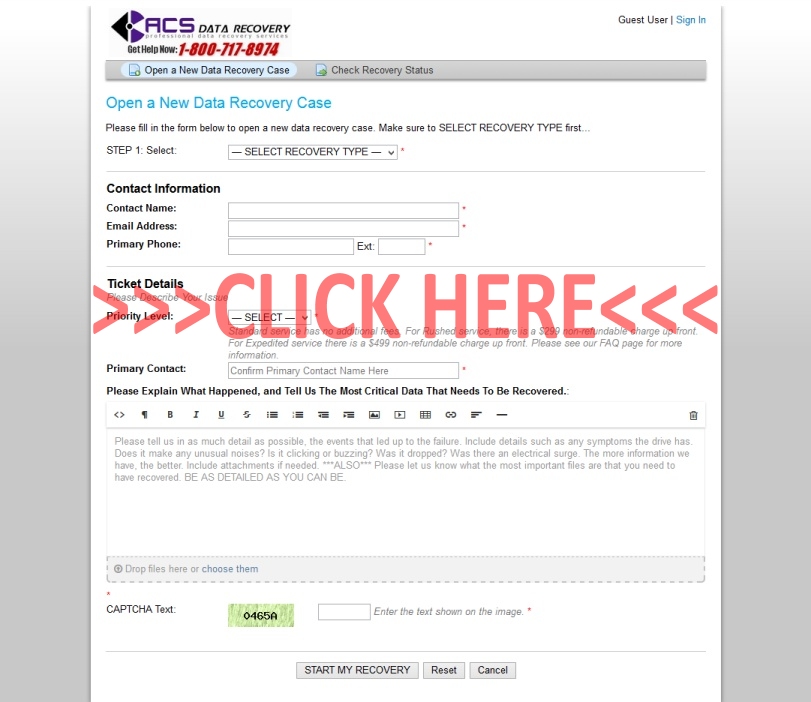
Create Your Data Recovery Case
By submitting your case you acknowledge and agree to the Terms and Conditions of our recovery services.
All jobs are shipped to our lab. We are NOT a walk-in business with normal hours.
Please note we only accept recovery work from customers within the United States.
CLICK HERE OR THE IMAGE BELOW TO START YOUR RECOVERY